
Melbourne · Australia and New Zealand
Ty Pryor: Fractional CMO for building, stone and trade businesses
In short
Ty Pryor is a Melbourne-based fractional CMO for building, stone and trade businesses across Australia and New Zealand, running a company’s whole marketing function part time: strategy, budget, website and search, Google and Meta ads, follow-up, sales systems and reporting to the directors, all set up in the client’s own accounts.
- A fractional CMO is a senior marketer who owns your marketing results part time, on a monthly retainer.
- Built for stone suppliers, fabricators, kitchen and renovation companies, builders and trade suppliers in Australia and New Zealand.
- Track record: Stone Ambassador grew 4x while I ran its marketing, and Asetica Surfaces’ enquiries rose 1.8x in a year.
- Every account stays in your name. Pricing is quoted on a 20-minute call.
Last updated 13 November 2026
Experience at a glance
- NowFounder, TY.PRYOR. Fractional CMO work and sales systems for building, stone and trade businesses.
- May 2024 to November 2026Head of Growth and Brand, Asetica Surfaces. Grew from 1 location to 3, with showrooms in Sydney, Melbourne and Perth.
- Five years to 2024Head of Marketing, Stone Ambassador Australia. The business grew 4x and went from 1 location to 5.
- 2020 to 2024Brands created: Vasari (2020), Zenith Surfaces (2023, launched March 2024) and Kaya Surfaces, plus the 2023 Stone Ambassador rebrand.
- Since 201412 years in marketing, 10 of them in the stone industry.
What I own
- Strategy and channel mix
- Budget and cost per job
- Website and search, including AI search
- Google and Meta ads
- Email and enquiry follow-up
- Sales systems and automations
- Reporting to the directors
What is a fractional CMO?
A fractional CMO (fractional chief marketing officer) is a senior marketer who runs a company’s marketing part time, on a monthly retainer, in place of a full-time hire. It is also called a part-time CMO, an outsourced CMO or a fractional marketing director, and the wider practice is known as fractional marketing or outsourced marketing. You get the person who writes the plan and answers for the result, for the share of the week your business needs.
In practice I set the plan, do most of the work myself, and direct any agency, freelancer or staff member you already have. The table compares that with the three usual alternatives.
| Fractional CMO | Marketing agency | Full-time marketing manager | Marketing consultant | |
|---|---|---|---|---|
| Who owns the strategy | The fractional CMO, with a written plan reviewed with the directors | Usually the agency's own channel; the plan across channels often sits outside the scope | The manager, once hired and up to speed | The consultant writes the plan; your team or others carry it out |
| Who does the work | Mostly the fractional CMO, plus any agency or staff they direct | The agency's team, on its own channels | The manager and any staff | Your team, after the plan is handed over |
| Who owns the accounts | You, in your name from day one | Varies; some agencies hold the ad accounts | You | You |
| Cost shape | Monthly retainer; ad spend paid straight to Google or Meta | Monthly fee per channel, sometimes a percentage of ad spend | Salary plus super, leave, tools and recruitment | Day rate or fixed project fee |
| Speed to start | Audit and 90-day plan in the first 4 weeks | Fast for a single channel | Weeks to recruit, then time to learn the business | Fast for an audit or a plan |
| Best fit | You need the whole picture planned, run and measured by one person | You need one channel run well | Marketing is big enough to fill a full working week | You have people to do the work and need direction |
Compare with agency, consultant and full-time hire
Marketing agency
- Who owns the strategy: Usually the agency's own channel; the plan across channels often sits outside the scope
- Who does the work: The agency's team, on its own channels
- Who owns the accounts: Varies; some agencies hold the ad accounts
- Cost shape: Monthly fee per channel, sometimes a percentage of ad spend
- Speed to start: Fast for a single channel
- Best fit: You need one channel run well
Marketing consultant
- Who owns the strategy: The consultant writes the plan; your team or others carry it out
- Who does the work: Your team, after the plan is handed over
- Who owns the accounts: You
- Cost shape: Day rate or fixed project fee
- Speed to start: Fast for an audit or a plan
- Best fit: You have people to do the work and need direction
Full-time marketing manager
- Who owns the strategy: The manager, once hired and up to speed
- Who does the work: The manager and any staff
- Who owns the accounts: You
- Cost shape: Salary plus super, leave, tools and recruitment
- Speed to start: Weeks to recruit, then time to learn the business
- Best fit: Marketing is big enough to fill a full working week
General comparison. Agency terms vary a lot, so ask any agency who owns the accounts before you sign.
Fractional CMO or marketing consultant?
Hire a marketing consultant when you need advice or a plan and already have people to carry it out. Hire a fractional CMO when you want one senior person to own the plan, run or direct the work, and answer for the results every month. Consultants usually bill by the day or project; fractional CMOs work on a monthly retainer.
- Scope. A consultant advises and hands over a plan; a fractional CMO owns the plan and keeps running it.
- Who does the work. With a consultant, your team. With a fractional CMO, mostly the CMO, plus any agency or staff they direct.
- Accountability. A consultant answers for the advice; a fractional CMO answers for enquiries and jobs won.
- How you pay. Day rate or project fee, against a monthly retainer for a set number of days.
Both work across Australia and New Zealand, mostly remotely. Pricing a full-time hire instead? Here is what a marketing manager really costs compared with a fractional CMO.
Results
What results has Ty Pryor delivered?
My results come from two in-house roles. Stone Ambassador Australia grew 4x and went from 1 location to 5 in the five years I ran its marketing. At Asetica Surfaces, Google search clicks rose 2.7x (mid-July to October, 2026 vs 2025), website visits 2.1x (October 2026 vs October 2025) and enquiries logged by the sales team 1.8x (the last 12 months vs the 12 before).
Asetica sources: Google Search Console, Google Analytics 4 and the sales team’s CRM.
Asetica sells stone surfaces to stonemasons, kitchen makers, builders and designers, and grew from 1 location to 3 while I ran its marketing in-house. A homeowner picks a colour, gets samples and then buys through a fabricator. That gives marketing two jobs: reach homeowners and the people who specify stone, and turn each sample and enquiry into work for the trade and the reps.
At the start there was no way to get samples from the website, and no one could trace a sale back to the marketing behind it. The systems further down changed both.
What does a fractional CMO do for a building company?
For a building, stone or trade company, a fractional CMO sets the marketing plan and budget, fixes tracking so every enquiry is counted, then runs or directs the website, search, Google and Meta ads, follow-up and sales reporting. Success is measured in qualified enquiries and jobs won, checked monthly on a dashboard the directors can read.
I build six systems, starting with the ones a client's numbers say matter most. The working versions at Asetica are shown below.
Measurement and a director dashboard
Tracking fixed first, then one dashboard of samples, spend, calls and forms. It starts like a marketing audit.
A website for free sample orders
Free samples ordered online, with separate routes for trade buyers and homeowners.
Search, including AI search
Technical SEO and content written to be quoted by ChatGPT, Gemini and Google's AI features.
Ads judged on enquiries
Google and Meta campaigns reviewed weekly against enquiries, as in my guide to Google Ads for tradies.
Sales follow-through
Big quotes and unchased samples land in the rep's week. The missed call calculator prices slow follow-up.
One plan, one owner
One written plan that the website, ads, content and reps all work from.
Systems I run for Asetica Surfaces
Five of the working systems behind the Asetica numbers, drawn as simple mock-ups with customer and staff names removed. A person approves anything customer-facing before it goes out.
A visits app for the reps
Reps plan the route and log each call-in on their phone. The CRM fills itself in, and the directors get a Friday summary per rep.
| Tender | Range fit | Known? |
|---|---|---|
| Job 1 | Colour match | Active account |
| Job 2 | Natural look | New builder |
| Job 3 | Colour match | Quoted last year |
Tender matching
Each Monday, newly listed building projects are matched to colours in the range, showing which builders the team already deals with.
Sample follow-up
Online sample orders reach the team’s follow-up list the next morning, and check-in emails wait for sign-off.
One weekly dashboard
Ads, analytics, search and online orders on one screen, so spend is judged on samples and enquiries.
An approval queue for fixes and replies
Website fixes, AI search improvements and email drafts line up for sign-off, and quotes that go quiet get flagged for a call.
Work I’ve led
Which brands has Ty Pryor built?
As Head of Marketing at Stone Ambassador Australia, I created Vasari Italian Surfaces in 2020, then Zenith Surfaces and Kaya Surfaces, and led the company’s 2023 rebrand. The work below covers those launches, brochures and sample books, building signage, showroom displays and websites for Stone Ambassador and Asetica Surfaces.


Watch: on camera and behind it
A podcast guest spot, a launch I presented, a stockist interview, the videos I front and one I produced. Each one loads from YouTube only when you press play.

How to choose a stone benchtop
Guest on the Home Building Podcast: a 40-minute talk on picking the right stone for a kitchen.Independent Building Advice · October 2025

Launching Zenith Surfaces
I present the launch of the zero crystalline silica range I created, alongside Stone Ambassador's CEO and GM.Stone Ambassador · March 2024

Zenith with a stockist
I interview Platinum Products Geelong, a Zenith stockist, about the new range.Stone Ambassador · March 2024

Stone Ambassador brand film
A two-minute brand film for kitchen benchtops and splashbacks.Stone Ambassador · June 2022

Slab stress test
Product proof on camera: do sintered stone slabs crack under the blade?Asetica Surfaces · September 2025
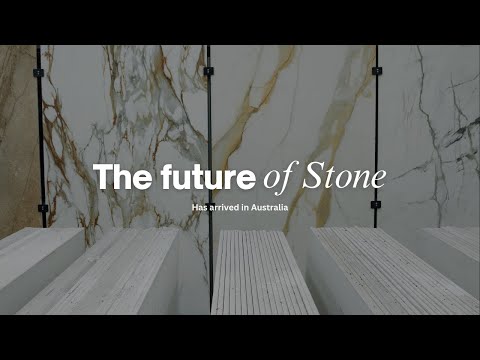
Range launch
A launch video I produced, introducing a European designer stone range to Australian buyers.Asetica Surfaces · June 2025
Does my business need a fractional CMO?
Your business is a good candidate for a fractional CMO if it already spends on marketing, sells jobs or products worth thousands of dollars each, and wants one senior person answerable for the result. Best suited to building, stone and trade businesses in Australia and New Zealand turning over roughly $2 million to $20 million a year.
Good fit
- Stone suppliers and distributors
- Stonemasons and fabricators
- Kitchen and renovation companies
- Builders
- Trade suppliers with reps on the road
Poor fit
- Businesses after a cheap, ads-only agency. A specialist agency or freelancer is the better buy for that.
- Businesses that can’t share real numbers on enquiries and jobs won.
What happens in the first 90 days with a fractional CMO?
The first 90 days set everything up, then the work settles into a monthly rhythm.
- Weeks 1 to 4. Audit, tracking fixed, dashboard live, baseline measured. You get a written 90-day plan with targets.
- Months 2 to 3. The quick wins: ads rebuilt, website conversion fixes, Google Business Profile and reviews, follow-up for every enquiry.
- From month 4, monthly. The slower work that keeps paying: search and AI search content, a content rhythm from your real jobs, email and SMS follow-up, sales automations. The dashboard refreshes weekly, we talk every fortnight, you get a short report each month and the plan is reset each quarter.
How long until a fractional CMO shows results?
Expect the first measurable changes inside the first 90 days. Tracking is fixed in weeks 1 to 4, and quick wins such as rebuilt ads and faster follow-up on enquiries land in months 2 and 3. Search and AI search content is slower, so judge it from month 4 onward against the baseline set in the first weeks.
The guide to lead response time shows why follow-up is usually the fastest win.
How much does a fractional CMO charge in Australia?
Australian fractional CMO engagements commonly cost about $4,000 to $25,000 a month, depending on scope, according to Expert360's fractional CMO hiring guide, which calls its rates indicative. For comparison, SEEK puts the average advertised salary for a Marketing Director at about $170,000 a year, before super, leave and recruitment costs. Paid by the day, fractional CMOs listed on Cemoh average about $1,287 a day, based on 368 rates.
Sources checked 13 November 2026. SEEK figure from its article updated 7 January 2026, based on SEEK job ads from July 2023 to June 2025. Cemoh day rate as shown on its fractional CMO page.
How my engagements are structured
- A monthly retainer.
- A set number of days a month, agreed upfront.
- A 3-month first term with a review at day 90, then 30 days' notice.
- Ad spend on top, paid by you straight to Google or Meta.
My price is quoted on the call, once I know the scope and how many days a month your business needs.
How do you choose a fractional CMO?
Choose a fractional CMO who has run marketing inside a business like yours, can show results with their sources, sets everything up in your accounts and agrees targets in writing. Ask for a 90-day plan before you sign, and check who does the hands-on work, because some hand delivery to an agency.
Five questions for the first call
- What have you run in my industry, and what changed while you were there?
- Whose name will the ad, analytics and website accounts be in?
- What will I have at the end of the first 90 days?
- How many days a month do I get, and who does the day-to-day work?
- Which numbers will you report on, and how often?
Not ready for a call?
Try the free marketing scorecard: 15 quick questions, roughly three minutes. It scores tracking, website, search, ads and follow-up, and names the first thing to fix.
Fractional CMO questions
Should I hire a marketing agency or a marketing manager?
Hire a marketing agency if you need one or two channels run well and someone in the business can steer it. Hire a full-time marketing manager once there is a full week of marketing work. Outsourced or fractional marketing, led by a fractional CMO, sits between the two: senior direction and hands-on work for a few days a month, with any agency reporting to them.
Fractional CMO vs full-time CMO: what's the difference?
A full-time CMO is an employee who works on your marketing every day, with a salary, super and leave. A fractional CMO does the same senior job for a set number of days a month on a retainer. Many smaller companies start fractional and hire full time once marketing fills a whole week.
How much does a fractional CMO cost?
In Australia, fractional CMO retainers commonly run from about $4,000 to $25,000 a month, depending on scope. My price is quoted on a 20-minute call, based on the days each month your business needs. Engagements start with a 3-month term and a review at day 90, then run on 30 days' notice, with ad spend paid by you on top.
Do you work outside Melbourne?
Yes. I work remotely with building, stone and trade businesses across Australia and New Zealand, with a fortnightly call and a monthly report. On-site days are by arrangement, for when a photo shoot, a showroom or a sales meeting needs me there in person.
Would a fractional CMO work with my accountant or CFO?
Yes. Your accountant or CFO sees the same dashboard as the directors, with ad spend, cost per enquiry and jobs won side by side. Quarterly budgets can be set with them in the room, and every invoice from Google, Meta and suppliers goes straight to your business, so the books stay simple.
Do I own the accounts?
Yes, every account is set up in your business's name. That includes your website, Google Ads, Meta ads, analytics, Search Console, email platform and CRM, with me added as a user. You can see every change and invoice at any time, and if we stop working together you simply remove my access.
About Ty Pryor
Fractional CMO and founder of TY.PRYOR, based in Melbourne. In marketing since 2014 (12 years), 10 of them in the stone industry: five as Head of Marketing at Stone Ambassador Australia, which grew 4x and went from 1 location to 5, then Head of Growth and Brand at Asetica Surfaces. I post free marketing breakdowns for trade owners on TikTok as @tydoesmarketing, my work history is on LinkedIn, and the free guides start here.
Book a 20-minute call
Bring rough numbers: what you sell, where you sell it and what you spend on marketing now. You’ll leave knowing what I’d fix first and whether a fractional CMO is worth it for your business.